The planning habit that undermines brand alignment
Many organizations feel the pressure to show progress before they’ve decided what “progress” actually means. In these moments, marketing is often asked to make ideas visible through calendars, campaigns, or new initiatives. It looks like momentum. Often, it isn’t.
Marketing strategist John Jantsch has observed a consistent pattern over decades of working with leadership teams. In many organizations, planning begins with marketing activity. Calendars are drafted; campaigns are outlined; new tools are approved. None of these decisions are wrong on their own, but they are frequently made before the strategy is set.
The foundational questions often go unasked: What kind of growth matters most right now? Which customers deserve our focus? What trade-offs is leadership willing to make when time and capacity are limited?
When those questions stay unresolved, marketing fills the gap. It becomes a stand-in for decisions leadership hasn’t made yet. Over time, priorities shift without intention, and the result is a significant lack of brand alignment.
A way to see the gap
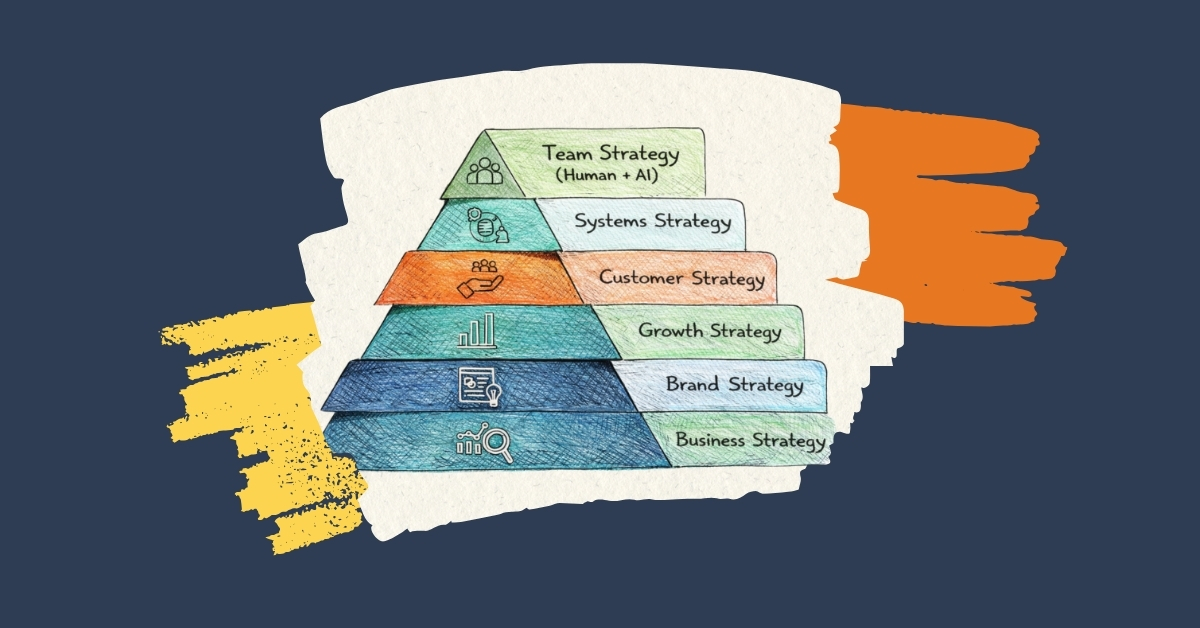
Jantsch frames this as a structural problem. Marketing struggles when it is asked to compensate for decisions that haven’t been made at the leadership level. He uses a “Strategy Pyramid” to organize these decisions as a sequence rather than a task list:
- Business Strategy: The core direction and “why” of the organization.
- Marketing Strategy: Brand identity, growth targets, and customer focus.
- Systems Strategy: The processes and tools that create consistency.
- Team Strategy: How people and resources work together.
The order is the point. Each layer shapes what is possible in the layer above it. Without this sequence, true brand alignment becomes impossible, and marketing is left to guess at the target. When a lower layer is unclear, the pressure shows up higher in the structure—usually in marketing. Campaigns may “perform” technically, but they often aim at the wrong thing.
Three questions worth asking now
Once plans are in motion, revisiting foundational decisions gets harder. Before your next planning conversation, try working through these three questions:
- What decision are we asking marketing to make for us? If marketing feels scattered, it’s often carrying unresolved choices about growth or priorities that belong at the business strategy level.
- Which part of our strategy is hardest to explain clearly? The foggiest layer is usually the one holding everything else back from achieving brand alignment.
- If we made fewer moves this quarter, which ones would matter most? Clarity often shows up not in what gets added, but in what leadership is willing to leave out.
Your turn: a 15-minute task
Before your next planning meeting, write down the one growth question your organization hasn’t fully answered yet. It might be who you’re trying to reach, what you’re willing to stop doing, or what success actually looks like this year.
Write it as a question, not a goal. Bring it to the meeting and see whether the plans currently on the table actually answer it.
If this raised questions about your own brand alignment or marketing strategy, please reach out at info@hookstrategic.com. We’re glad to talk through it.